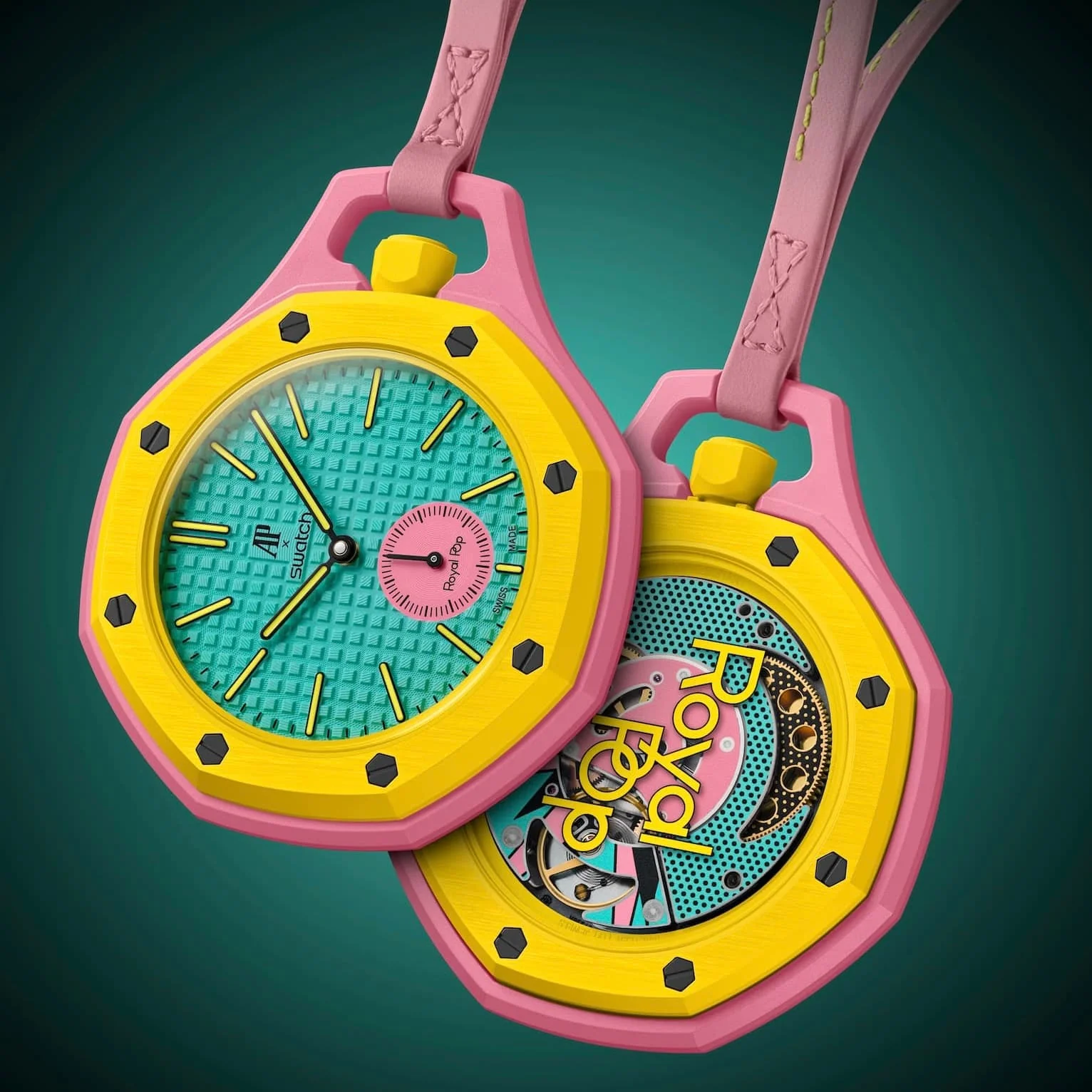
On May 16, 2026, the Swatch Royal Pop watch was released. Swatch, known for fun colors and affordable prices loved by children and Popes alike, collaborated with Audemars Piguet, known for the $50k Royal Oak, waiting lists, and watches loved by celebrities and businessmen alike. The retail price is about $400, with resale values around $2,000 to $3,000.
The release? A grotesque spectacle of the absurd. Instead of online orders, Swatch decided to concentrate all the demand at its retail stores, where each location would have an undisclosed but limited supply.
The result? About what you’d expect from an industry actively cultivating hype-driven resellers who can make $1,000+ by standing in line for three days. These resellers, and maybe even some fans, created genuinely dangerous crowd conditions at several locations. There were a few arrests, and several stores declined to open at all. The videos are hard to watch: bodies pressed into storefronts, people pushing forward, security overwhelmed, the whole scene wobbling between product launch and public-safety failure. I even watched a security guard empty a can of OC spray into an out-of-control crowd inside a store. That is a very high-risk use of force, and the fact that this is the buying experience for a $400 novelty watch is embarrassing. All for an “affordable” and “fun” pocket watch that fits the aesthetics of third graders. When stores are canceling, when people are getting arrested, when OC spray is your crowd control, this isn’t a product launch. It’s a public-safety failure.
One of the most striking videos is outside a Swatch store in New York. People there will sell you a Royal Pop for $3,000, a physical manifestation of the secondary market only possible through online demand.
I’m not standing entirely outside of this either. I love watches: accurate and useful tools, or jewelry, that don’t require internet connectivity; objects that represent craft, obsession, and a history of manufacturing going back hundreds of years. I’ve spent meaningful money on this industry, but I can’t help feeling that my genuine enthusiasm is being used to fuel hype releases and scarcity games, then monetized via the secondary market. Every reseller standing in line for two days? An unpaid prop and social media signal that “people really want these, and so do you!” I don’t blame the individuals. The financial incentive is clear. Instead, we need to take a hard look at the companies choosing this strategy to sell goods.
The worst part? None of this is unpredictable. Swatch has a history of releasing affordable versions of iconic luxury watches, like the MoonSwatch, which was a global hit. Swatch knows just how much people want a famous luxury silhouette. It knows what happens when you combine an affordable price with a limited release and first-come, first-served sales. People will camp out to earn multiples of the retail price on the secondary market. Crowds queued outside stores create a massive social media campaign, and serve as proof of demand that feeds secondary-market sales. What Swatch either didn’t know, or didn’t properly account for, was just how chaotic it would become.
So right now, it looks like Swatch and AP get it all: massive headlines, a viral marketing campaign, and enough demand that a plastic watch is being listed for almost $3,000 online. So who pays the price? It’s the people waiting in line, taking a physical risk to be there first. It’s the collectors who actually like the watches, but had to work on Thursday and Friday to afford them in the first place. In other words, it’s us, the consumers. The people who love watches. And it looks like we’re getting screwed.
There were alternatives. Release the watch online. Use a registration system and lottery with randomized purchase windows. It’s a $400 watch from a company that sells more than three million watches per year. They can make enough of them to meet demand. Then, once the first wave of hype is over, sell them in stores.
This is what bothers me most. The watch itself isn’t a villain. The watch is an affordable, colorful, and playful plastic object you should be comfortable wearing and inevitably breaking. The villain is the release strategy that maximizes hype at the cost of physical safety.
I still love watches. I just hate how the watch industry turns that love into leverage.